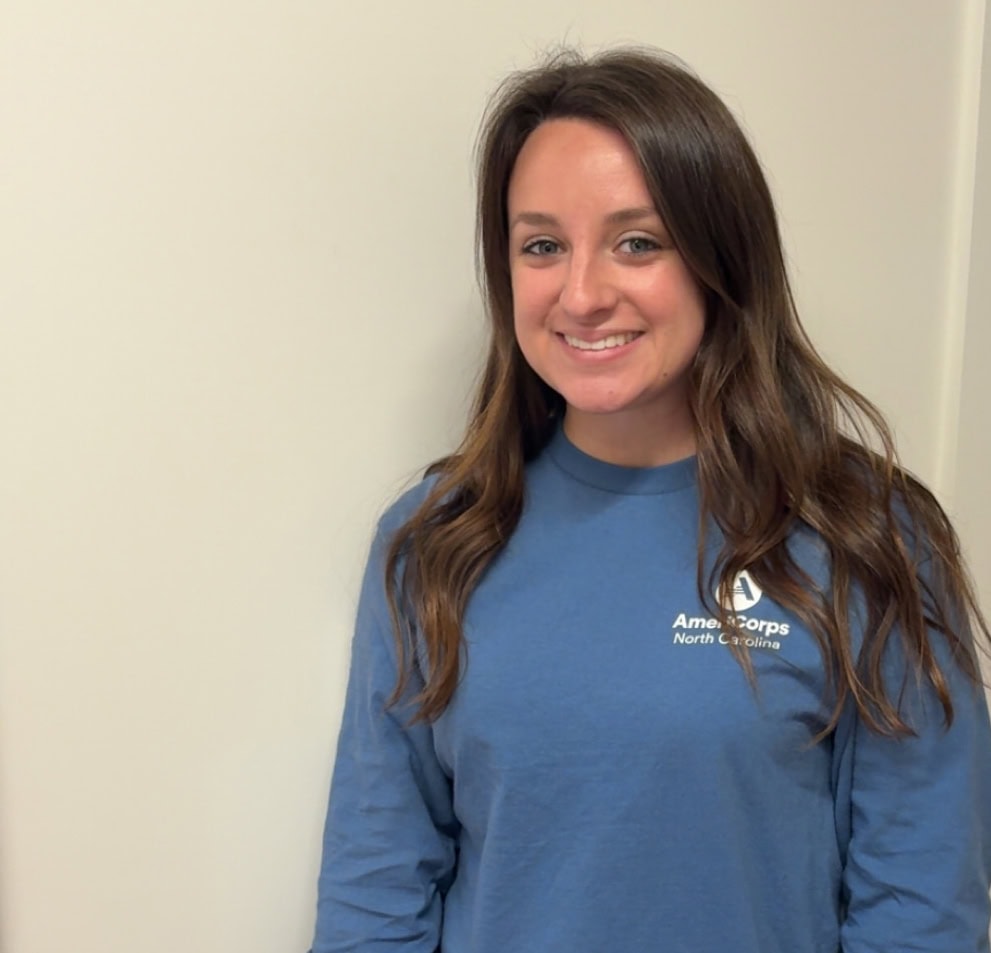
Project MARS/AmeriCorps collects “Great Stories” from its members in which they reflect on their experiences mentoring in the classroom and the progress they see in students. This month’s story was written by Maraeh Carringer.
Looking back on my time at Martins Creek Elementary School, one day stands out clearly, a day that taught me the quiet power of patience, creativity, and connection. Among the many students I worked with, there was one child who had gained a reputation for shutting down during class. No matter who tried, no one seemed able to reach him. He refused to take part, rarely completed assignments, and kept a wall built firmly around himself. But on that day, something shifted.
I remember watching him at his desk, shoulders slumped, eyes fixed anywhere except on his work. Instead of approaching him with another reminder or a stem tone – things he had already heard countless times – I decided to try something different. I pulled a chair up beside him, lowered my voice, and turned the lesson into a game. What had been a writing assignment became a challenge. “Let’s see if we can beat the clock,” I told him.
At first, he glanced at me with suspicion, unsure whether this was just another attempt to get him to work. But when he realized I was not there to force him, only to play alongside him, something softened. He picked up his pencil. He answered a question. Then another. Soon he was leaning forward, studying the page with a focus I had not seen from him before. Each time he completed a step; I celebrated it like a small victory, and slowly he began to celebrate too.
What meant the most was not simply that he finished his work that day. It was the moment he looked at me, a shy pride in his expression, and asked if we could play the “work game” again tomorrow. In that instant, I understood how deeply children crave connection, not discipline for its own sake, not pressure to perform, but genuine human understanding.
That day at Martins Creek taught me that reaching a child sometimes requires stepping out of traditional roles and meeting them where they are. By choosing compassion over correction and creativity over rigidity, I was able to reach a student who had been unreachable for so long. And in doing so, he taught me as much as I taught him.